Private 5G networks are changing the way supply chains operate, making them faster, safer, and more efficient. This new technology allows businesses to manage their operations better by providing real-time data and seamless communication. As we explore how private 5G is transforming supply chain management, we will look at its benefits, challenges, and future trends.
Key Takeaways
- Private 5G networks boost real-time data sharing, helping companies make quicker decisions.
- They enhance security by allowing businesses to control their own networks, reducing risks from outside threats.
- With private 5G, supply chains can automate processes, leading to lower costs and higher efficiency.
- This technology improves tracking of goods, making it easier to manage inventory and shipments.
- Private 5G supports the use of smart devices and AI, further optimizing supply chain operations.
The Role of Private 5G in Modern Supply Chain Operations
Private 5G networks are becoming essential for modern supply chains. They provide high-speed, low-latency communication that is crucial for efficient management. This technology allows companies to manage their operations more effectively by ensuring reliable communication and data processing.
Enhancing Real-Time Data Processing
With private 5G, businesses can process data in real-time. This means they can make quicker decisions based on the latest information. For example:
- Instant updates on inventory levels
- Immediate alerts for supply chain disruptions
- Faster response to customer inquiries
Improving Communication Across Devices
Private 5G networks improve communication between various devices in the supply chain. This connectivity allows:
- Seamless interaction between machines and systems
- Better coordination among team members
- Enhanced collaboration across different locations
Supporting Seamless IoT Integration
The integration of Internet of Things (IoT) devices is simplified with private 5G. This technology supports:
- Real-time tracking of shipments and assets
- Automated inventory management systems
- Smart warehousing solutions that optimize space and resources
The shift to private 5G networks is not just a trend; it is a necessary step for companies aiming to stay competitive in today’s fast-paced market.
In summary, private 5G networks are transforming supply chain operations by enhancing data processing, improving communication, and supporting IoT integration. This technology is paving the way for a more efficient and responsive supply chain.
Key Benefits of Private 5G Networks for Supply Chains
Private 5G networks are changing the way supply chains operate by providing several key advantages. These networks enhance efficiency and speed, allowing businesses to respond quickly to changes in demand and streamline their operations. Here are some of the main benefits:
Increased Efficiency and Speed
- Real-time data processing: With private 5G, companies can process data instantly, leading to faster decision-making.
- Improved asset tracking: Businesses can monitor their assets in transit, ensuring they know where everything is at all times.
- Enhanced communication: Devices can communicate seamlessly, reducing delays and errors in operations.
Enhanced Security and Privacy
- Network isolation: Private 5G networks are separate from public networks, which helps protect sensitive data.
- End-to-end encryption: This ensures that data transmitted over the network is secure from unauthorized access.
- Control over data: Companies have full control over their data, which is crucial for maintaining privacy.
Cost Reduction and Savings
- Lower operational costs: Owning a private network can reduce reliance on public networks, leading to significant savings.
- Reduced downtime: With better connectivity and faster response times, companies can minimize disruptions.
- Long-term investment: Although the initial setup may be costly, the long-term benefits often outweigh these costs.
The integration of private 5G networks in supply chains not only boosts efficiency but also enhances security and reduces costs, making it a vital investment for modern businesses.
How Private 5G Enhances Supply Chain Visibility
Private 5G networks are changing how businesses see and manage their supply chains. With real-time data access, companies can track their products from start to finish. This technology allows for better decision-making and faster responses to issues.
Real-Time Tracking of Shipments
- Instant updates on shipment locations.
- Ability to reroute deliveries based on current conditions.
- Enhanced customer satisfaction through accurate delivery estimates.
Improved Inventory Management
- Automated stock level monitoring.
- Alerts for low inventory to prevent stockouts.
- Data-driven insights for better ordering decisions.
Predictive Analytics for Future Performance
- Analyzing past data to forecast future trends.
- Identifying potential risks before they become problems.
- Optimizing supply chain processes based on predictions.
The integration of private 5G networks allows businesses to harness the power of data, leading to improved visibility and efficiency in supply chain operations.
In summary, private 5G networks provide the tools needed for enhanced visibility in supply chains, making them more efficient and responsive to changes in the market.
Implementing Private 5G in Warehousing
Automating Inventory Management
Private 5G networks can significantly enhance inventory management in warehouses. By connecting various devices and sensors, warehouses can automate tracking and management processes. This leads to:
- Real-time updates on stock levels
- Reduced human error in inventory counts
- Faster response times to stock shortages
Optimizing Warehouse Layouts
With the help of private 5G, warehouses can optimize their layouts for better efficiency. This includes:
- Analyzing traffic patterns of goods and workers
- Adjusting storage locations based on demand
- Implementing automated guided vehicles (AGVs) for smoother operations
Enhancing Worker Safety with Wearables
Private 5G also supports the use of wearable technology to improve worker safety. These devices can:
- Monitor worker health and location in real-time
- Send alerts in case of emergencies
- Provide training and guidance through augmented reality (AR)
The integration of private 5G in warehousing not only boosts efficiency but also ensures a safer working environment for employees.
By leveraging the capabilities of private 5G, warehouses can transform their operations, making them more efficient and secure. This technology is a game-changer for modern warehousing, paving the way for smarter logistics solutions.
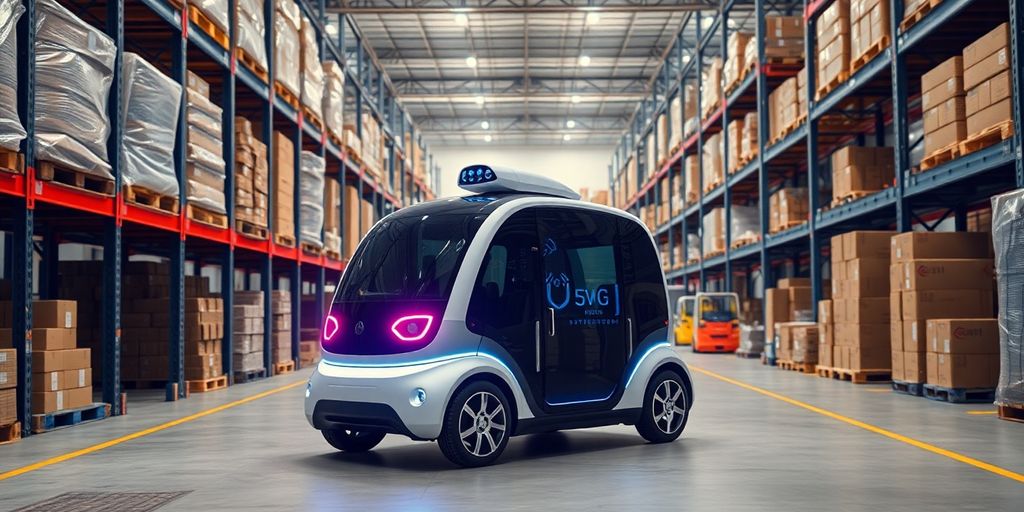
Private 5G and Autonomous Vehicles in Logistics
Real-Time Vehicle Tracking
Private 5G networks enable real-time vehicle tracking, which is crucial for logistics. With this technology, companies can monitor their vehicles’ locations instantly. This helps in:
- Reducing delays in deliveries
- Enhancing route optimization
- Improving overall efficiency
Improving Delivery Times
The speed and reliability of private 5G can significantly improve delivery times. Autonomous vehicles can communicate with each other and with central systems to:
- Adjust routes based on traffic conditions
- Coordinate with warehouses for timely pickups
- Ensure that deliveries are made without unnecessary stops
Reducing Operational Costs
By utilizing private 5G, logistics companies can reduce operational costs. This is achieved through:
- Lower fuel consumption due to optimized routes
- Decreased labor costs with automated vehicles
- Enhanced maintenance schedules based on real-time data
The integration of private 5G in logistics is not just a trend; it is a game-changer that enhances efficiency and reduces costs.
In summary, private 5G networks are transforming how logistics companies operate, especially with the use of autonomous vehicles. They provide the necessary connectivity for real-time tracking, improve delivery times, and help in cutting down costs, making logistics operations smarter and more efficient.
Additionally, the use of autonomous guided vehicles (AGVs) in warehouses is a prime example of how private 5G is reshaping logistics. These vehicles can transport goods efficiently, ensuring that operations run smoothly and effectively.
Challenges in Deploying Private 5G Networks
Deploying private 5G networks comes with several significant challenges that organizations must navigate. Here are some of the main hurdles:
Overcoming Infrastructure Barriers
- High Initial Costs: Setting up a private 5G network requires a substantial investment in infrastructure. This includes the cost of equipment, installation, and ongoing maintenance.
- Limited Coverage: 5G technology is still expanding, and not all areas have reliable coverage. This can hinder operations in regions where 5G is not yet available.
- Need for Expertise: Many companies are familiar with traditional networks but may lack the necessary knowledge to implement and manage private 5G systems effectively. This gap can slow down deployment and increase reliance on external consultants.
Ensuring Network Security
- Cybersecurity Risks: With the increased speed and connectivity of 5G, the risk of cyberattacks also rises. Organizations must implement robust security measures to protect sensitive data.
- Data Privacy Concerns: As more devices connect to the network, the potential for data breaches increases. Companies need to prioritize privacy and ensure compliance with regulations.
- Regular Security Updates: Continuous monitoring and updating of security protocols are essential to safeguard against evolving threats.
Managing Costs and Investments
- Budget Constraints: The initial costs of deploying a private 5G network can be daunting, especially for smaller businesses. Organizations must carefully assess their budgets and potential return on investment.
- Long-Term Commitment: Investing in private 5G is a long-term commitment that requires ongoing financial resources for maintenance and upgrades.
- Balancing Costs with Benefits: While the benefits of private 5G can be substantial, organizations must weigh these against the costs to ensure a viable business case.
In summary, while private 5G networks offer transformative potential for supply chains, overcoming these challenges is crucial for successful implementation. Organizations must be prepared to invest in infrastructure, prioritize security, and manage costs effectively to reap the benefits of this advanced technology.
The Impact of Private 5G on Supply Chain Decision-Making
Data-Driven Insights
Private 5G networks provide real-time data that helps companies make better decisions. With faster data transfer, businesses can analyze their operations quickly. This leads to improved decision-making based on accurate information. For example, companies can track their shipments and inventory more effectively, allowing them to respond to issues as they arise.
Enhanced Predictive Analytics
Using private 5G, businesses can utilize advanced analytics tools to predict future trends. This means they can foresee potential problems and opportunities. By analyzing historical data alongside real-time information, companies can make informed choices that enhance their supply chain efficiency.
Improved Risk Management
Private 5G networks also help in managing risks. With better data visibility, companies can identify risks earlier and take action to mitigate them. This proactive approach can save time and money, ensuring smoother operations.
Investing in private 5G is crucial for companies looking to stay competitive in today’s fast-paced market. It allows for smarter decision-making and better overall performance.
Summary of Benefits
| Benefit | Description |
|---|---|
| Faster Data Processing | Enables quick analysis of supply chain data. |
| Better Communication | Improves collaboration among teams. |
| Proactive Risk Management | Helps identify and address risks early. |
Case Studies: Successful Private 5G Implementations in Supply Chains
Manufacturing Sector
In the manufacturing industry, private 5G networks have been game-changers. One key example is the Port of Felixstowe, which implemented the "5G Ports" project. This initiative improved the performance of remote-controlled yard cranes, leading to increased efficiency and 24/7 operations.
Retail and E-commerce
Retailers are also benefiting from private 5G. For instance, companies are using 5G to enhance asset tracking, allowing them to monitor inventory in real-time. This has resulted in better stock management and reduced waste.
Transportation and Logistics
In transportation, the Port of Busan reported a 40% increase in yard productivity by automating its fleet of cranes over 5G. This shows how private 5G can significantly improve operational efficiency in logistics.
| Sector | Implementation Example | Key Benefit |
|---|---|---|
| Manufacturing | Port of Felixstowe | Increased crane efficiency |
| Retail and E-commerce | Real-time inventory tracking | Better stock management |
| Transportation | Port of Busan | 40% increase in productivity |
The integration of private 5G networks is transforming supply chains by providing real-time visibility and improving operational efficiency. This technology is paving the way for smarter logistics and better decision-making.
Future Trends in Private 5G for Supply Chain Management

As we look ahead, private 5G networks are set to revolutionize supply chains in several exciting ways. Here are some key trends to watch for:
Integration with AI and Machine Learning
- Enhanced decision-making through data analysis.
- Predictive maintenance for equipment and assets.
- Improved customer service with personalized experiences.
Expansion of IoT Applications
- Increased use of smart sensors for real-time tracking.
- More connected devices leading to better data collection.
- Enhanced automation in warehouses and logistics.
Advancements in Network Technology
- Development of compact and affordable solutions for small businesses.
- Improved coverage and reliability in remote areas.
- Greater focus on security features to protect sensitive data.
The future of supply chain management is bright with private 5G, as it promises to enhance efficiency and connectivity across the board.
These trends indicate that private 5G will not only improve current operations but also pave the way for innovative solutions in the supply chain sector.
Comparing Private 5G with Traditional Network Solutions
When it comes to supply chain management, Private 5G networks offer significant advantages over traditional network solutions. Here’s a breakdown of how they compare:
Speed and Latency
- Private 5G provides ultra-low latency, which is crucial for real-time applications.
- Traditional networks often struggle with higher latency, affecting responsiveness.
- This speed allows for faster data processing and decision-making.
Coverage and Reliability
- Private 5G can cover larger areas with fewer access points, making it more efficient.
- Traditional Wi-Fi networks require more access points to achieve similar coverage.
- This means fewer dead zones and more reliable connections in warehouses and factories.
Security and Control
- With Private 5G, companies have greater control and security compared to public networks. The ability to manage network resources and ensure dedicated bandwidth is essential for protecting sensitive data.
- Traditional networks may expose businesses to higher risks of data breaches due to shared resources.
| Feature | Private 5G | Traditional Networks |
|---|---|---|
| Speed | Ultra-low latency | Higher latency |
| Coverage | Larger area with fewer points | More points needed |
| Security | Enhanced control and privacy | Shared resources |
Private 5G networks are transforming how supply chains operate by providing faster, more reliable, and secure connections. This shift is essential for businesses looking to innovate and stay competitive in a rapidly changing market.
The Role of Private 5G in Supply Chain Sustainability
Private 5G networks are becoming essential for making supply chains more sustainable. These networks help reduce the carbon footprint by optimizing resource use and supporting green logistics initiatives.
Reducing Carbon Footprint
- Private 5G enables better energy management, allowing companies to monitor and reduce energy consumption.
- It supports smart grids that can adjust energy use based on real-time data.
- By improving efficiency, companies can lower their overall emissions.
Optimizing Resource Use
- Real-time data helps in tracking resource consumption, leading to better planning.
- Automation reduces waste by ensuring that resources are used only when needed.
- Enhanced visibility allows for more effective inventory management, minimizing excess stock.
Supporting Green Logistics Initiatives
- Private 5G facilitates the use of electric and autonomous vehicles, which are more environmentally friendly.
- It allows for better route planning, reducing fuel consumption and emissions.
- Companies can implement sustainable practices more easily with the connectivity that private 5G provides.
The integration of private 5G in supply chains not only boosts efficiency but also plays a crucial role in achieving sustainability goals. By leveraging this technology, businesses can make significant strides towards a greener future.
In summary, private 5G networks are transforming supply chain management by promoting sustainability through reduced emissions, optimized resource use, and support for green initiatives. This technology is not just about speed and efficiency; it’s also about creating a more sustainable world.
Final Thoughts on Private 5G in Supply Chain Management
In conclusion, private 5G networks are changing the game for supply chain management. They offer faster and more reliable connections, which help businesses track their products in real-time. This means fewer mistakes and delays, leading to happier customers. With the ability to connect many devices at once, private 5G makes it easier for companies to gather and use data effectively. As more businesses adopt this technology, we can expect to see even greater improvements in efficiency and cost savings. Embracing private 5G is not just a smart move; it’s essential for companies that want to stay competitive in today’s fast-paced world.
Frequently Asked Questions
What is a private 5G network?
A private 5G network is a special wireless network that companies set up for their own use. It offers fast and secure internet connections that help businesses run better.
How does private 5G improve supply chain operations?
Private 5G helps supply chains by allowing real-time tracking of goods, better communication between devices, and faster data processing. This makes everything run smoother.
What are the main benefits of using private 5G in logistics?
The main benefits include faster operations, improved security, and lower costs. It helps companies work more efficiently and keep their data safe.
Can private 5G networks support IoT devices?
Yes, private 5G networks are great for connecting many IoT devices. This allows companies to monitor their operations in real-time and make quick decisions.
What challenges come with setting up a private 5G network?
Challenges include the cost of installation, making sure the network is secure, and ensuring that all devices can connect properly.
How can private 5G help with inventory management?
Private 5G can automate inventory tracking, making it easier to know what items are in stock and when to reorder. This reduces errors and saves time.
What role does private 5G play in using autonomous vehicles?
Private 5G allows for real-time communication with autonomous vehicles, helping them navigate and deliver goods more efficiently.
Is private 5G secure for sensitive data?
Yes, private 5G networks are designed to be secure, protecting sensitive data from unauthorized access and ensuring privacy.