5G cellular networks are not just about faster internet speeds—they’re set to change everything by 2025. Imagine a world where your doctor can perform surgery from miles away, or students can attend a virtual classroom from anywhere. From healthcare to entertainment, education to smart cities, 5G is the backbone of a connected future. But it’s not all smooth sailing. There are hurdles, like cost and security, that we need to jump over. Still, the opportunities are huge, and the changes are just beginning.
Key Takeaways
- 5G will revolutionize healthcare with remote surgeries and real-time patient monitoring.
- Education will be transformed with virtual classrooms and augmented reality.
- Entertainment will see a new era with cloud gaming and virtual reality concerts.
- Smart cities will thrive with real-time traffic management and enhanced public safety.
- The Internet of Things will expand massively, connecting countless devices in smart homes and industries.
Revolutionizing Healthcare with 5G Cellular Networks 2025
Remote Surgeries and Telemedicine
Imagine a world where a surgeon in New York can perform a procedure on a patient in Tokyo without leaving their office. That’s the power of 5G in healthcare. With ultra-low latency, 5G makes remote surgeries not just possible, but reliable. Surgeons can use robotic tools with precision, ensuring that distance doesn’t compromise patient care. Telemedicine, too, is set for a massive upgrade. Real-time video consultations will become smoother, allowing doctors to diagnose and treat patients remotely with confidence.
Real-Time Patient Monitoring
5G technology enables the continuous monitoring of patients, even when they’re not in a hospital. Wearable devices can track vital signs and send data instantly to healthcare providers. This means doctors can get real-time updates on their patients’ health, enabling quicker interventions when necessary. Patients with chronic conditions will benefit immensely, as their health can be managed proactively rather than reactively.
Enhanced Data Security in Healthcare
With the massive amount of data being transmitted over 5G networks, security is paramount. Thankfully, 5G networks are designed with advanced encryption methods to protect sensitive health information. This ensures that patient data remains confidential and secure, even as it travels across the globe. The integration of 5G technology in healthcare is transforming patient care through high-speed, low-latency data transmission, leading to significant market growth. The 5G in healthcare market is projected to reach USD 834.24 billion by 2032, with a compound annual growth rate (CAGR) of 36.56%.
As 5G becomes more embedded in healthcare, it promises to not only enhance the quality of care but also make it more accessible to people everywhere.
Transforming Education Through 5G Cellular Networks 2025
Virtual Classrooms and Remote Learning
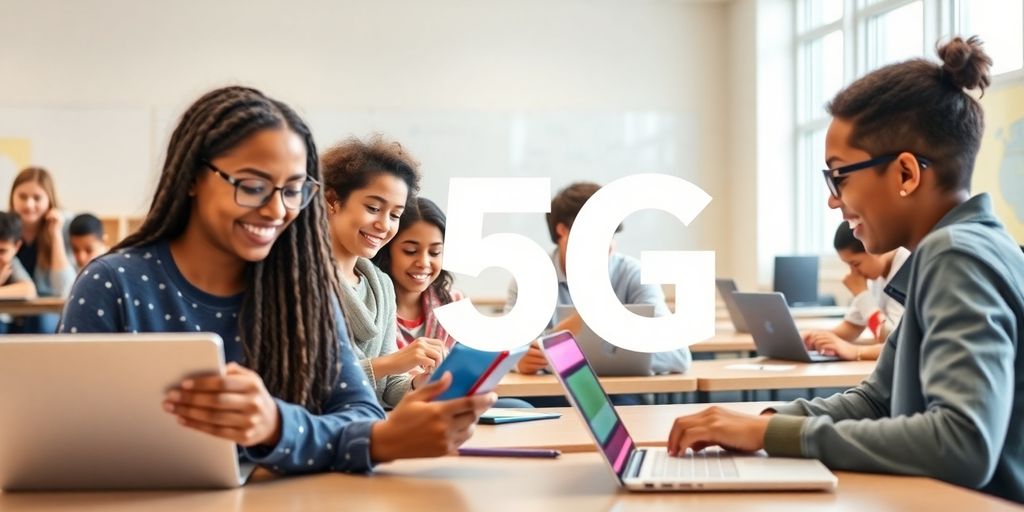
In 2025, 5G technology is set to redefine how we think about education. Virtual classrooms are no longer a concept of the future; they’re a reality. With 5G’s lightning-fast speeds and low latency, students can attend classes from anywhere in the world, experiencing real-time interactions that closely mimic in-person learning. This technology breaks down the barriers of geography, ensuring that students in remote areas have access to the same quality of education as those in urban centers. 5G makes learning truly borderless.
Augmented Reality in Education
Augmented Reality (AR) is another exciting frontier that 5G will enhance in education. Imagine students exploring ancient civilizations or dissecting a virtual frog without leaving their classroom. 5G’s capabilities allow AR applications to run smoothly, providing immersive educational experiences that were once thought impossible. This not only makes learning more engaging but also helps students retain information better by connecting theoretical knowledge with practical experiences.
Bridging the Digital Divide
One of the most significant impacts of 5G in education is its potential to bridge the digital divide. Many students lack access to high-speed internet, which limits their educational opportunities. With 5G, connectivity issues become a thing of the past, as it provides a stable and fast internet connection even in underserved areas. This ensures that every student, regardless of their location or socio-economic status, has the opportunity to learn and succeed.
Education is not just about imparting knowledge; it’s about creating opportunities. With 5G, we’re moving towards a future where every student has the chance to thrive, no matter where they are.
In conclusion, 5G is not just a technological upgrade; it’s a revolution in education. By enabling virtual classrooms, enhancing AR experiences, and bridging the digital divide, 5G is set to transform the educational landscape, making it more inclusive and accessible for everyone.
5G Cellular Networks 2025: A New Era for Entertainment and Gaming
Seamless Streaming and Cloud Gaming
Alright, so let’s talk about how 5G is shaking things up in the entertainment world. Imagine streaming your favorite shows in ultra-HD without a single buffer. That’s what 5G brings to the table. The speed and low latency mean you can enjoy 4K or even 8K content like it’s nothing. And for gamers? Cloud gaming becomes a reality. You can play high-end games on your phone or tablet, no console needed. It’s like having a gaming PC in your pocket.
Virtual Reality Concerts
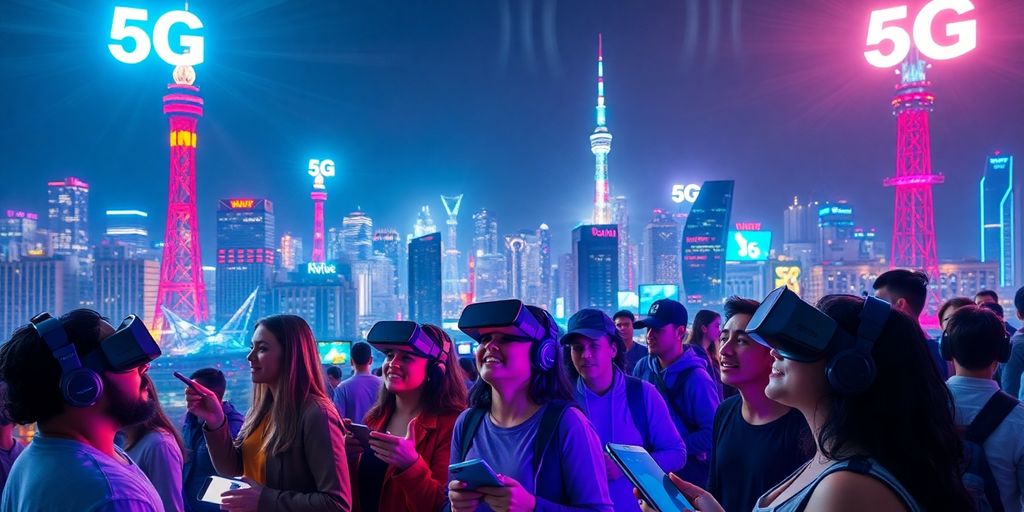
Now, concerts are going virtual, and 5G is making it happen. Picture this: you’re at home, but it feels like you’re front-row at a concert. With VR headsets and 5G, artists can perform live, and you can experience it as if you’re there. The high-speed connection ensures there’s no lag, just pure immersive sound and visuals. It’s not just music, either; think of theater performances and sports events going VR. The possibilities are endless.
Interactive and Immersive Experiences
5G is also opening doors to interactive experiences we couldn’t have dreamed of before. Imagine watching a movie where you can choose the storyline or interact with characters. Or maybe a sports game where you can view from multiple angles in real-time. With 5G, these experiences are not just possible; they’re becoming the norm. It’s all about creating a more engaging and personalized entertainment world.
With 5G, entertainment isn’t just about watching or playing; it’s about experiencing and interacting in ways we’ve never thought possible. The future is here, and it’s more exciting than ever.
The Impact of 5G Cellular Networks 2025 on Smart Cities
Real-Time Traffic Management
In the hustle and bustle of city life, traffic jams are a common headache. But with 5G, cities can tackle this issue head-on. Imagine traffic lights that adjust in real-time based on the flow of vehicles, or smart sensors that predict congestion before it even happens. 5G’s low latency allows for instant communication between vehicles and infrastructure, making roads safer and more efficient.
Smart Infrastructure and Utilities
Smart cities aren’t just about flashy tech; they’re about making life easier. With 5G, utilities like water and electricity can be monitored and managed remotely. This means fewer outages and more efficient use of resources. Imagine a city where streetlights dim when no one’s around, saving energy and reducing costs.
Enhanced Public Safety and Surveillance
Safety is a top priority for any city. 5G can revolutionize public safety by enabling faster response times. Surveillance cameras connected through 5G can provide real-time footage to emergency services, helping them respond quicker to incidents. Plus, with 5G, drones can be deployed for surveillance, offering a bird’s-eye view of any situation.
As cities grow and evolve, the need for smarter, more efficient systems becomes evident. 5G is not just a technological upgrade; it’s a fundamental shift in how cities operate, paving the way for a future where urban living is seamless and interconnected.
5G Cellular Networks 2025: Driving the Future of IoT
Massive Device Connectivity
In 2025, the Internet of Things (IoT) is expected to hit a staggering milestone with over 30 billion devices connected globally. This explosion of connectivity is largely thanks to the advancements in 5G technology. 5G networks provide the backbone needed to support this massive influx of IoT devices, enabling everything from smart fridges to industrial sensors to communicate seamlessly. This kind of connectivity wasn’t feasible with older network generations, which simply couldn’t handle the sheer volume or the speed required. With 5G, the latency is so low that devices can communicate almost instantaneously, making real-time data exchange a reality.
Smart Homes and Wearables
The concept of smart homes isn’t new, but 5G is set to make them more efficient and responsive than ever. Imagine walking into a room and having the lights, temperature, and even your favorite music adjust automatically to your preferences. This level of automation is possible because 5G allows for faster and more reliable communication between devices. Wearables are also benefiting from this leap in technology. From fitness trackers to smartwatches, these devices can now provide more accurate and timely health insights, helping users make better lifestyle choices.
Industrial IoT and Automation
Industries are on the brink of a revolution with 5G-enabled IoT. In manufacturing, for instance, factories are becoming smarter and more efficient. Machines equipped with IoT sensors can monitor their own health and predict maintenance needs before breakdowns occur, reducing downtime and costs. Automation is also getting a significant boost. With the high-speed, low-latency nature of 5G, robotic systems can operate with greater precision and coordination, enhancing productivity across various sectors.
The future of IoT in 2025 isn’t just about connecting more devices; it’s about creating a network where devices communicate and collaborate in ways that improve our lives and businesses. As 5G technology continues to evolve, the potential for innovation in IoT is virtually limitless.
By 2025, the synergy between network infrastructure and IoT will shape a new era of connectivity, transforming industries and daily life alike. The advancements in energy-efficient antennas and fiber optic cables will further enhance this transformation, setting the stage for a smarter, more connected world.
Challenges and Opportunities in 5G Cellular Networks 2025
Infrastructure and Deployment Costs
The rollout of 5G networks isn’t cheap. It involves a dense network of small cell towers and extensive fiber optic installations. These costs can be a major hurdle for telecom companies, especially in rural areas where the return on investment might be slower. Balancing these costs while ensuring widespread coverage is a significant challenge.
Cybersecurity and Privacy Concerns
As 5G connects more devices, the risk of cyber attacks increases. The more devices we have, the more entry points there are for cybercriminals. Protecting user data and maintaining privacy is a top priority, but it’s not an easy task with so many connected devices.
Regulatory and Policy Challenges
Navigating the regulatory landscape can be tricky. Different countries have different rules, and aligning these can be tough. There’s also the challenge of ensuring that 5G technology is used responsibly and ethically, without infringing on people’s rights.
As we dive into the 5G era, the challenges are clear, but so are the opportunities. The key is finding a balance between innovation and responsibility. The future is bright, but it requires careful planning and execution.
In summary, while 5G promises incredible advances, it comes with its own set of challenges. Addressing these will be crucial to fully realizing the potential of this transformative technology.
5G Cellular Networks 2025: Business and Economic Implications
New Business Models and Opportunities
5G is more than just a technological upgrade; it’s a catalyst for new business models. Companies can now offer services that were once impossible. Imagine a world where telcos don’t just sell data plans, but they sell experiences. With 5G, businesses can create impulse purchase options, where users can pay a little extra for a "business class" network experience during peak times. And it’s not just about speed; it’s about offering unique, 5G-enabled experiences like real-time translation or AR sports streaming. Partnerships are key here, allowing telcos to embed 5G services directly into apps or devices. This not only broadens the customer base but also enhances the user experience.
Impact on Global Supply Chains
The impact of 5G on global supply chains is profound. Real-time data sharing becomes a reality, enabling seamless tracking and management of goods across continents. With low latency and high-speed connectivity, companies can better manage logistics, reducing delays and improving efficiency. This connectivity allows for better coordination between suppliers, manufacturers, and retailers, ensuring that the right products are delivered at the right time. In essence, 5G is set to streamline operations, cut costs, and boost productivity across the board.
Economic Growth and Job Creation
5G is not just a tech revolution; it’s an economic one. The rollout of 5G networks is expected to create millions of jobs globally, from infrastructure development to new roles in tech companies. As businesses adopt 5G technologies, there will be a growing demand for skilled workers to manage and innovate with these new tools. Additionally, as industries become more efficient, the economic benefits will ripple through to consumers, potentially lowering costs and increasing access to goods and services.
5G isn’t just changing how we connect; it’s reshaping the very fabric of our economy, creating new opportunities and driving growth in ways we are only beginning to understand.
Conclusion
So, what does all this mean for us in 2025? Well, 5G is not just about faster internet on your phone. It’s like opening a door to a whole new world of possibilities. Imagine cities where everything is connected, from traffic lights to your fridge, making life smoother and more efficient. In healthcare, doctors could perform surgeries from miles away, thanks to real-time data sharing. Education could become more interactive, with virtual classrooms bringing students from different corners of the world together. But it’s not all sunshine and rainbows. There are challenges, like making sure everyone has access to this tech and keeping our data safe. Still, the potential is huge. As we step into this new era, it’s exciting to think about how 5G might change our lives in ways we can’t even imagine yet. Are you ready for the ride?
Frequently Asked Questions
What is 5G technology?
5G is the fifth generation of mobile networks, offering faster internet speeds, less delay, and the ability to connect many devices at once. It’s a big step up from 4G.
How does 5G improve healthcare?
5G helps doctors perform remote surgeries, monitor patients in real-time, and keep medical data safe and secure. It’s like having a doctor by your side, even from far away.
Can 5G change how we learn?
Yes! 5G allows students to join virtual classrooms and use cool tools like virtual reality to learn. It helps kids in faraway places get the same education as everyone else.
What are the benefits of 5G in entertainment?
With 5G, you can stream movies without buffering, play games in the cloud without lag, and even attend virtual concerts. It’s like having a movie theater and a concert hall in your pocket.
How will 5G affect smart cities?
5G will help manage traffic better, make buildings smarter, and keep cities safer. It’s like giving a city a brain to think and act quickly.
What challenges does 5G face?
5G needs lots of new equipment, like small towers, and older devices won’t work with it. There are also worries about keeping all those connected devices safe from hackers.